Our Family Craft Shop Amish Furniture Review
Custom Amish furniture in any size, built by hand in hardwood. The value proposition is unusually clean: joinery from a tradition that predates the disposable-furniture era, sold without a showroom's markup.
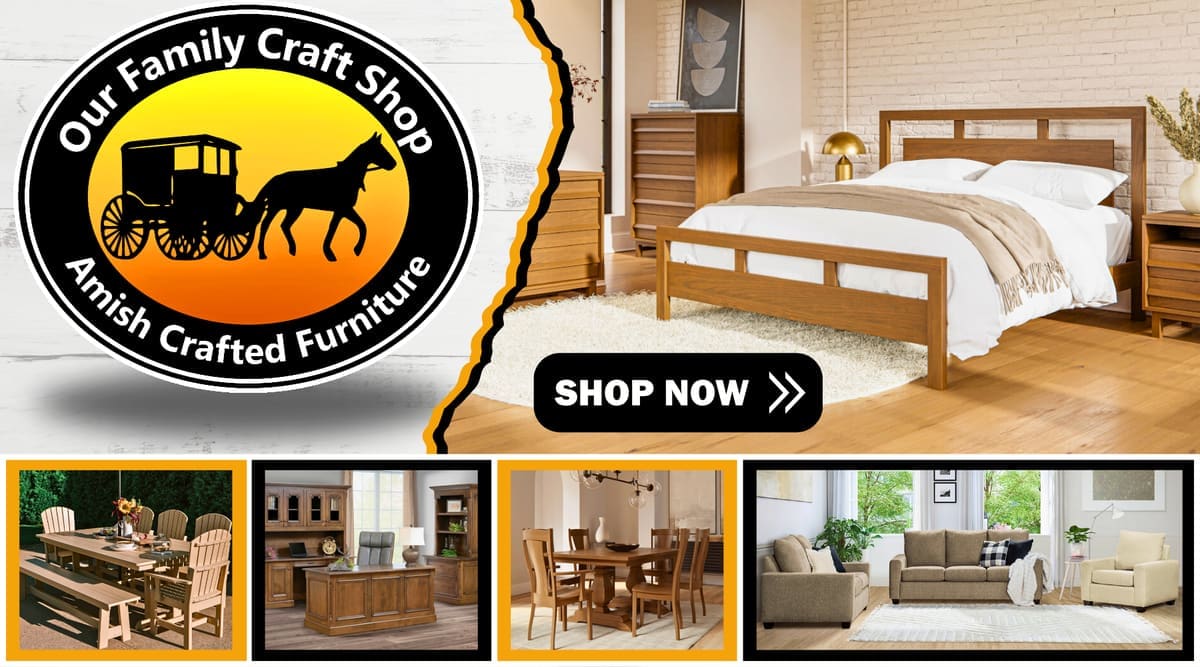
- Type
- Custom Amish furniture and home decor
- Sizing
- Personalized craftsmanship, any size
- Rooms
- Living, dining, office, outdoor
Reasons to buy
- Genuine Amish hardwood construction with traditional joinery
- Personalized craftsmanship in any size
- Covers living, dining, office and outdoor
- Built for generational use, not a replacement cycle
Reasons to avoid
- Handmade lead times — plan months, not days
- Solid hardwood pricing
- Traditional styling won't suit modern-minimalist rooms
Amish furniture occupies an odd place in American retail: it is the most consistently well-built furniture most people can buy, and also the least marketed. Our Family Craft Shop is a straightforward example of the model — handcrafted hardwood pieces, customizable to any size, sold direct from the makers to the room they're going in. The quietness is structural rather than accidental: these are workshops, not brands, and the money that elsewhere funds advertising here goes into hardwood and labor. What marketing exists is word of mouth — which happens to be the one channel that can't be bought, a detail worth something in a market where most 'craftsmanship' claims are written by copywriters.
What you're buying is joinery discipline. Mortise-and-tenon construction, hardwood that moves with the seasons the way solid wood is meant to, and finishes applied to be maintained rather than replaced. The contrast with mass production is mechanical, not sentimental: stapled and cam-locked assemblies depend on fasteners that loosen as wood expands and contracts, while cut joinery holds because of its geometry — wood locked into wood, designed around seasonal movement instead of defeated by it. Pieces from this tradition routinely survive several owners; the phrase 'heirloom furniture' is used loosely across the industry and accurately here.
Custom sizing deserves particular credit. Rooms in real houses have awkward dimensions — an alcove, a low window, a wall that's four inches short of every stock sideboard — and a maker who builds to your measurements solves the problem that mass retail asks you to live with. It also beats the usual workaround of buying the closest stock size and living with the gap, which is how most rooms end up subtly wrong forever. Measure the space properly, note the baseboards and outlets, and bring real numbers to the conversation — a maker can only build to the measurements you actually give them.
Hardwood care is simpler than its reputation suggests. Day to day it wants nothing exotic — sensible placement away from heat sources, an occasional clean, coasters where hot and wet things live. The long game is where solid wood holds its ace: decades out, a tired or damaged surface can be sanded and refinished, turning what would total a veneered piece into a weekend repair. Furniture that can be maintained changes how you live with it; scratches become history instead of depreciation. The same logic runs through the moving parts — drawers and doors on a piece like this are built to be adjusted over the years, not written off when they drift.
The trade-offs are the standard ones for handmade: months, not days; hardwood prices; and a traditional aesthetic that suits some homes and fights others. If your taste runs modern-minimal, look elsewhere — and if it runs toward furniture that outlives you, this is the category to shop, and this is the model to buy it from. Between those poles, the deciding question is simple: how long do you intend to keep the next piece of furniture you buy — and would you rather pay for it once or several times?
How we tested
The Our Family Craft Shop Amish Furniture was scored against the same written rubric we apply to every Amish & Heirloom product — real-world performance, build quality, ease of use, upkeep and value. Full protocol on our How We Test page.